Aegis Solo 3: what its 100 watts really ask for
One hundred watts printed on a mod that runs from a single cell. The figure appears on every British listing for the Aegis Solo 3, almost never followed by what it implies once you look at the current side of the equation.
Between the removable cell version and the built in battery version, the difference is invisible on the chassis. It only shows up in what the electronics have to draw from the source to hold the number on the screen.
Two Aegis Solo 3 devices sold under one name
Geekvape sells the model in two versions whose appearance and functions are identical. Only the energy source changes, and that single detail governs everything else about the device.
The first runs on a single 18650 cell, not supplied, exactly as the Solo 2 did. The second carries a built in 3000 mAh battery. Both are rated to 100 W and both carry a USB-C port for charging and firmware.
British shops list them separately as external battery and built in, which is why the most common question on UK forums about this kit is not how it vapes but which of the two to buy. The answer is less about performance than about what you are willing to look after.
On the removable cell version, retailers here consistently recommend an external charger rather than the USB-C socket for routine charging. That is not a comfort preference, it is a monitoring question, and it is the main practical argument for the external version.
A dedicated charger displays the voltage reached and the current it is pushing, which the mod never shows you. It also lets you retire a tired cell without taking the chassis out of service, whereas the 3000 mAh version obliges you to replace the whole device the day its capacity collapses.
The rest of the specification is common to both references. As with earlier generations of the range, the chassis claims the water, dust and shock resistance that built the Aegis reputation, with an IP68 rating quoted across British listings for this generation.
How high to set an Aegis Solo 3 in practice
The number describes what the chassis is capable of emitting, not a cruising setting. The chipset accepts the instruction without argument, the source then has to supply the corresponding current, and that is precisely where the margin closes.
In practice the coils supplied in the kit carry published ceilings of their own, well below the chassis figure. Smart mode, which reads the resistance fitted and proposes a setting accordingly, never aims at the top of the scale printed on the packaging.
British reviewers of the S100 make the same observation in plainer language, describing 100 W as a high figure for a device fed by one cell. That is a judgement about the source, not a criticism of the electronics.
Reading a cell datasheet instead of trusting the wrap
This is the part no product listing does for you, and the only part that genuinely answers the question. A regulated mod does not simply pass the cell voltage to the coil, it steps that voltage up or down to hold whatever you have set.
What the cell is asked for therefore depends on three things at once: the power you have selected, the voltage the cell happens to be sitting at in that moment, and the efficiency of the conversion circuit.
As the cell drains, its voltage falls and the demand rises for exactly the same figure on screen. A setting that behaves impeccably on a freshly charged cell is not the same request an hour later.
The figure that settles the matter is published by the cell manufacturer, not by the mod maker and not by the shop. Look for the manufacturer datasheet that corresponds to the exact model number, then read its continuous discharge line rather than any number silkscreened on the wrap.
That distinction matters more than it sounds. Rewrapped cells circulate widely, and a wrap can advertise a rating the cell underneath was never given by whoever actually made it. Compare the datasheet line with what your own setting demands, and treat the shop description as marketing until the datasheet agrees with it. If no datasheet exists for the exact model, that absence is itself the answer.
Four habits carry the rest of the load. Buy cells in matched pairs and keep them together for the life of the pair if a device ever takes two, so they age at the same rate. Replace any cell whose wrap or insulating ring is nicked or torn rather than patching it with tape.
Carry spare cells in a rigid plastic case, never loose in a pocket alongside keys or coins. And charge on a charger designed for the chemistry and format you are actually using, which brings the argument back to the external charger recommendation above.
AS Chip 4.0, six modes and a puff counter
The Aegis Solo 3 is driven by the AS Chip 4.0, which handles power delivery with the stated aim of preserving available capacity. Six modes are reachable from the menu, with clearly separate jobs.
- Smart: automatic reading of the resistance value, with a setting proposed to match.
- Power: manual adjustment in watts, and the reference mode for everyday use.
- TC-TCR: temperature control, reserved for compatible wire types.
- Boost: exploits the maximum potential of the chassis.
- Eco: a deliberate restriction on consumption.
- Memory: five configurations you can save and recall.
The colour TFT screen shows the charge level, the active mode, the power in watts, the voltage in volts, the puff counter and the resistance value it has read. The menu colour can be changed. Five presses turn the mod on or off, three presses open the menu.
Touch unlocking has replaced the lock button
The physical lock button has disappeared from the chassis, and its absence is deliberate rather than an oversight. Three sensors sit under the coating of the grip and detect the hand holding the device, unlocking it automatically.
Left in a pocket or a bag, the mod locks itself again. The technology appeared first on the Aegis Legend 3 before being carried over here. Its benefit is mechanical rather than a matter of comfort, since it prevents the blind firing that chars a coil without anybody noticing.
The navigation buttons, for their part, are now flush under the screen instead of standing proud of the body.
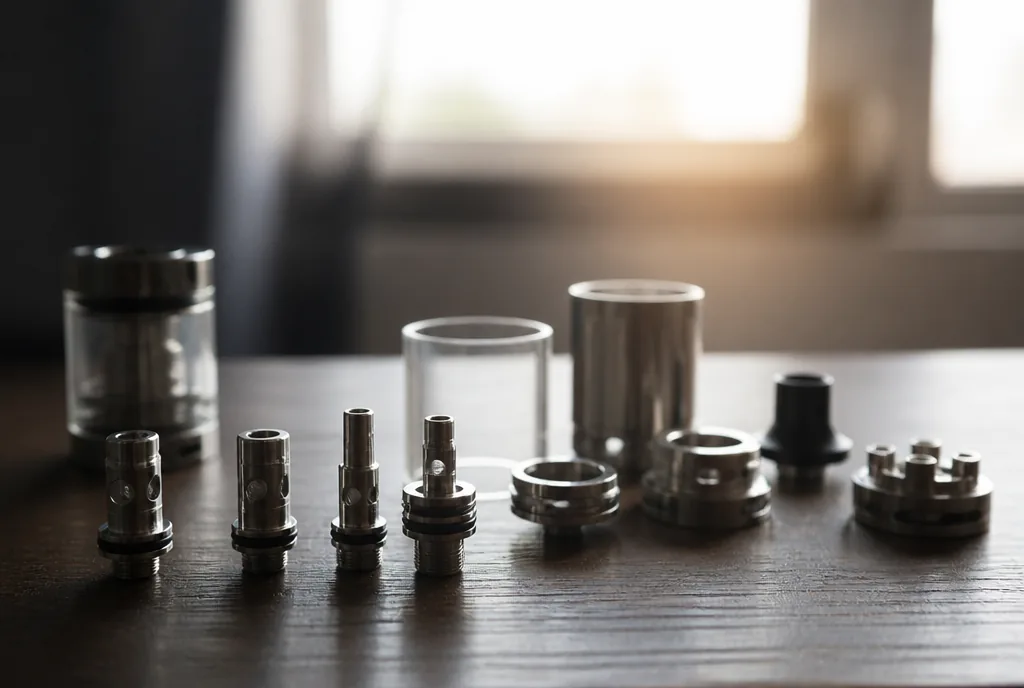
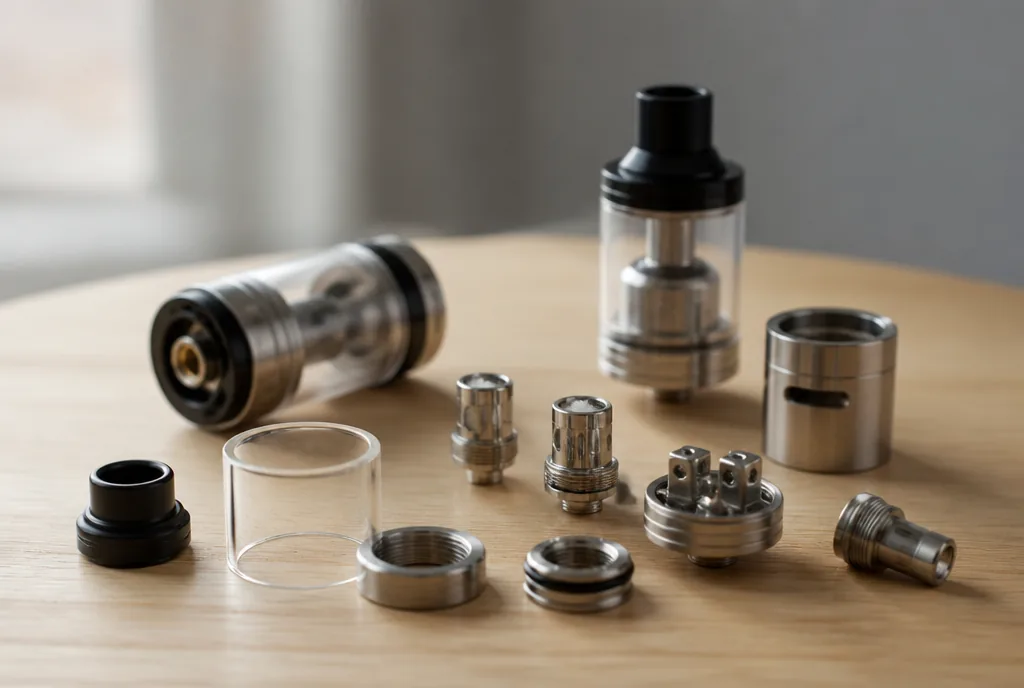
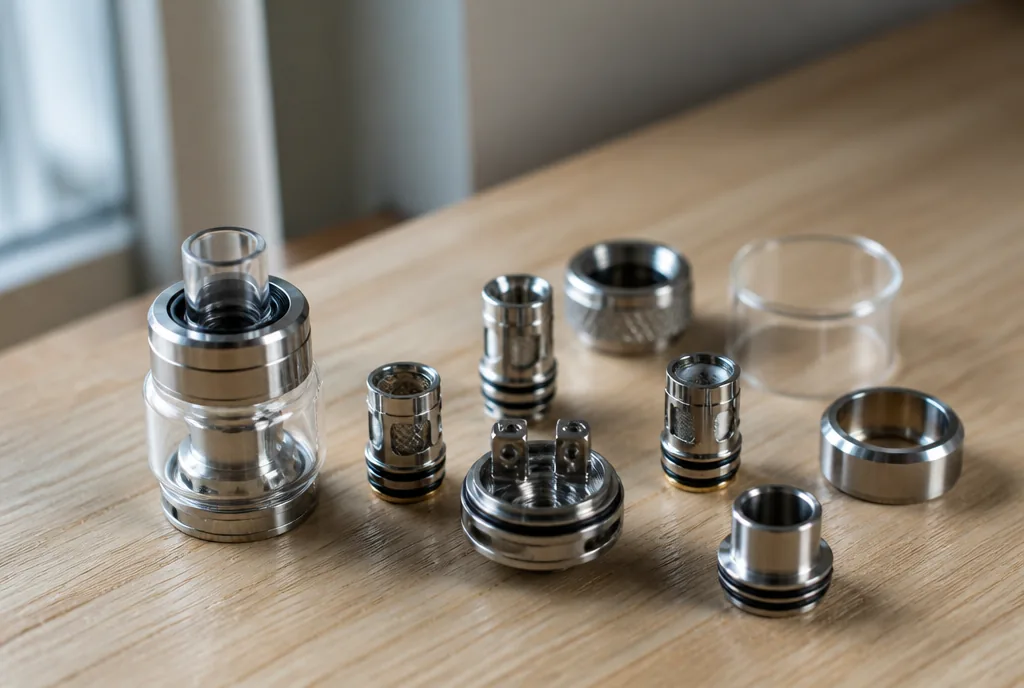
The Z Sub-Ohm tank supplied, in British trim
Geekvape did not choose the newer Z Fli for this kit but the 2021 Z Sub-Ohm Tank. In the United Kingdom the kit arrives with that tank in 2 ml trim, since refillable tanks sold here are capped at that capacity and nicotine containing e-liquid is capped at 20 mg/ml in 10 ml bottles.
That point is worth making explicitly, because a capacity quoted on a listing written for another market is simply not what lands on your doormat. Read the British listing, not the international product page.
The tank takes the Z Series, whose published ranges frame the real working envelope of the mod. The 0.15 ohm XM Boost is published at 70 to 85 W, the 0.2 ohm XM Boost at 70 to 80 W, the 0.25 ohm Dual at 45 to 57 W and the 0.4 ohm XM and XM Boost at 50 to 60 W.
Not one value in the series calls for the chassis figure, and the hungriest of them stops well short of it. The number on the box therefore corresponds to no setting the manufacturer recommends with the tank it supplies in the same package.
The VG content asked for deserves reading too. The two lowest values call for at least 70 percent vegetable glycerine, the others are content with 50. A liquid that is too thin on a 0.15 ohm circulates quickly but copes badly with the heat produced at the top of the range. The full breakdown of the series sits in our guide to Geekvape coils by series and by tank.
Frequently asked questions
Can the built in battery version be charged while vaping?
The USB-C port allows charging, but vaping on charge makes the charging circuit and the discharge circuit work at the same time. Occasional use remains possible, making a habit of it is not advisable.
Does TC mode work with the coils supplied?
No. The Z Series uses Kanthal, a wire whose resistance varies too little with heat to drive any usable temperature control.
Can another tank be fitted to this mod?
Yes, through the standard threaded connection, provided you respect the deck diameter to avoid overhang. The wattage range of the new part must also sit inside what the chassis can do.
Can the puff counter be reset?
It resets from the menu, like the other counters on the device. It is a usage indicator rather than a safety figure.
What if the mod stops displaying the resistance value?
The deck contact is the first suspect, since a trace of dried liquid is enough to interrupt the reading. A dry clean of the threaded connection restores the display in most cases.
Choose your version by the cell, not by the display
The 100 W figure describes a chassis capability, not a cruising regime. On an Aegis Solo 3 with a removable cell, the real question is what the manufacturer of the cell you have fitted publishes about it, and whether you have read that document rather than the wrap. On the 3000 mAh version the constraint is internalised by the manufacturer, at the cost of a battery you cannot replace.
That is the logic governing every regulated device, whatever the badge on the front. The source decides and the display follows, which is also why the same reasoning runs through our reading of the Zeus coil ranges and our walkthrough of changing a coil on a Voopoo Drag X.
Editorial content for adult readers only. Vaping products usually contain nicotine, a substance that causes addiction. Not for sale to under-18s in the United Kingdom. This article is not a buying recommendation.